Sunday, February 12, 2017

Looking Forward to your Final Projects

It's only week six, but we're already taking time to look forward to your final projects. Why? Because we're at a crossroads between our first and second major sections of the semester and that's the ideal time to reflect on what we've already done and how it'll shape the work that follows.

Throughout this first phase of the term we've traced the evolution of English Studies from its origins to the multi-modal approach it takes in the 21st century. Now we're getting ready to look a little more closely at three much-lauded books that share a similar hybrid approach to their chosen subjects. In Maggie Nelson's Bluets, the focus seems like a simple one: the color blue. Yet, in her hands we discover a great complexity behind that singular topic. Claudia Rankine explores contemporary issues surrounding race in Citizen: An American Lyric, and while we know that won't be a simple topic, we marvel at the depth and breadth of her argument. Finally, while the main idea behind Lauren Redniss' Thunder & Lightning: Weather Past, Present, Future seems clear to us, the choices she makes in working through that field reveal a perspective all her own.

These books present a blueprint for the work you'll be doing once we return from spring break, when everyone will workshop two short pieces that work in a similar mode to Nelson, Rankine, and Redniss. Those two short pieces will be part of a longer final paper you'll write that will have similar aims, as I'll reiterate below.


So what should you be doing now?
  1. If you haven't done so already, you should start cultivating a short list — two or three items maximum — of ideas that you think you'd be interested in writing through. They can be an abstract idea like Nelson's (a color, a quality, a virtue, etc.), a demographic categorization like Rankine's (gender, age, sexual orientation, class), or a discrete field like Redniss' (baseball, space travel, cooking, etc.). There are lots of possibilities here, and my desire is for you to find something you feel passionate about exploring in diverse ways, and about which you can produce some sort of argument or synthesized conclusion. If you're uncertain if your idea is too broad or narrow in scope, or if you're looking for guidance, please be in touch.
  2. You should start thinking about specific cultural artifacts that will serve as facets of your argument, remembering all of the various media we've spent the past few weeks exploring. It'll take a lot of brainstorming and fine-tuning to get a final series of points that will work well together.
  3. Keep these last two points in mind as you make your way through our next three books, and think analytically about the ways in which each author goes about constructing their own arguments.

What will the final look like?

I'll post more information about both the workshop round and the final as each approaches. For the workshop round you'll be submitting two pieces in the ballpark of 500 words each, and taken together those will be about half of your final, which should be about 2000 words minimum. If you want to think in five-paragraph essay form, you'll need to have at least three main sections that your essay is anchored by, though these should still be relatively broad sub-topics that can accommodate complex analysis using more than just one piece of evidence. Each of your workshop pieces might correspond to a rough draft of one of those sections. 

I'm not one to split hairs, but roughly speaking, I'd like at no more than 2/3 of your evidence to be literary (i.e. coming from a book), which means that the remaining 1/3 might be a film, or music, or a work of art, a specific object, a word, etc. Conversely, I'd like you to still have some sort of literary focus, so at least 1/3 of your source material should be literary.

The challenge here is two-fold: 1) finding a novel topic capacious enough to provide for all sorts of potential evidence, and 2) to find, analyze, and weave together your evidence in such a way that it produces some sort of cohesive conclusion. The latter might be harder than the former, but that's another very good reason to be paying attention to the way in which Nelson, Rankine, and Redniss construct their books.


Gah! Gah? Gaaaah!?

Yes, it's normal to have questions about this. I'm happy to provide answers today and along the way, and if you're thinking critically and conscientiously about the reading we'll be doing in the next phase of the class, a lot of things will become clearer.

February 15: Digital Humanities Tools for English Studies

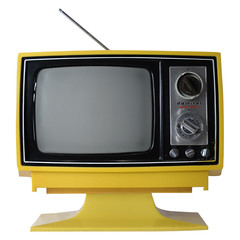
No, it's not quite like this . . . It's more like sitting at your laptop until your butt falls asleep.
Digital humanities has been the new buzzword in the academic world for the past decade or so, and with good reason — while we tend to think of computer technology as being a tool of STEM fields, it also has tremendous potential to revolutionize fields such as our own. Over the past several years I've been involved with DH-centric efforts here at UC — including my work with the Elliston Project, our annual THATCamps, and as part of the advisory group behind our forthcoming Digital Scholarship Center — and through my work at UPenn as well (including PennSound, Jacket2, and the HiPSTAS project).

Originally, I'd intended to spend this day giving you a much more comprehensive overview of the realm of digital humanities, but I think it would be a better use of our time to provide you with a few practical tools you might find useful in your work this semester and throughout your time at UC.


Google Books: Simply put, this is the world's largest full-text database. A lot of the material is only available in limited preview or snippet form, but that can still help you find what page(s) what you're looking for will be on in the hard copy of the book. Simple keyword searching can help you track down certain scenes, phrases, quotes, ideas, etc. in an instant, especially when you didn't bother to take notes, outline, annotate the book, etc. Searching books on Amazon is a second option when the specific edition you want is locked down on Google. That information's still there, however, and that leads to our next tool. Beyond searching within one book, doing a more general search is a good way to find critical perspectives and/or information you might not have otherwise known about.


Google Ngram viewer: Google's Ngram viewer allows you to trace trends in usage in books over time from 1800 to 2000 (using the complete corpus of Google Books' archives) and make conclusions about what influences those trends. Here, for example, we can see the use of "Dylan" as it gets a boost from Dylan Thomas in the 1950s, a bigger boost from Bob Dylan in the 60s into the 70s, and then become the name of at least seven kids in your eighth grade class:


You can compare terms against one another (separating them with commas) and adjust the time frame as needed, and it'll also provide Google Books results broken down by time periods for you to browse. While the Ngram viewer works well for historical searches, it doesn't help much with more contemporary issues. For that, we'll need yet another tool.


Google Trends: The Google Trends database starts in 2004 and tracks information in more or less realtime. It can parse results accounting for web traffic vs. appearances in books and other printed media indexed in Google Books, and can similarly track interest over time, regional interest, and related search terms. Here, for example, you can see Google traffic for Sam Dubose and Ray Tensing from 2015 to the present:


The Wayback Machine: The Internet Archive is dedicated to the seemingly-impossible task of documenting the ever-changing landscape of the world wide web from relatively close to its cultural watershed moment in the mid-1990s to the present day. One of their more useful tools is The Wayback Machine, which allows users to browse multiple snapshot versions of a website as catalogued by its army of web crawlers. It's a wonderful way to get your hands on data that's otherwise inaccessible, whether the site just happens to be down temporarily or went offline years ago. It's also a wonderful tool that can be used to track changes that someone might or might not want you to know they've made.


Notetaking Apps: You need a way to keep track of your digital stuff. A lot of people like Evernote. I like Google Keep. It allows me to import entries straight from my browser and tag them as necessary to keep my info straight. Consider getting into the habit of using a resource like this sooner rather than later.

Wednesday, February 1, 2017

February 13: Studying Words


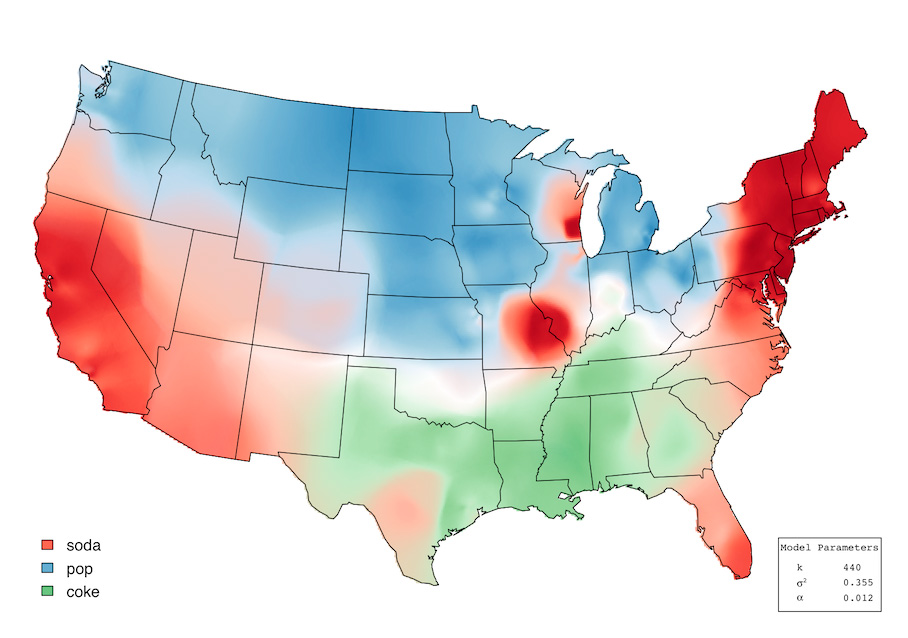
Before we get to today's readings I'd like to you take a little quiz. Specifically, the New York Times regional dialect quiz — based on the decade-old work of linguistics researchers Bert Vaux and Scott Golder — which went viral in late 2013 thanks to a novel presentation in a quiz format and some well-constructed heat maps that allowed users to drill down to local variations in speech. Given that we probably have some level of geographic variety in our class composition this should be a good way for you to start thinking about the relative flexibility of day-to-day speech conventions that we take for granted as absolute.

Regional differences in the term used for soft drinks.

That linguistic variability is intimately tied to our sense of English as a uniquely mutable and evolving language, and that's certainly not a new idea, as we discover when reading Walt Whitman's 1885 essay, "Slang in America" [PDF], which extends ideas present in his poetry from the very beginning (recall Whitman published Leaves of Grass with a brief glossary explaining to unfamiliar readers what terms like "pismire," "Paumanok," "Tuckahoe," and "quahog" meant).

This appreciation of regional and temporal variability frequently yields modern-day listicles like the BBC's recent "Lost in Translations: Words with Incredible Meanings," Slate's "The United Slang of America," The Guardian's "Basic Question: Did Sylvia Plath Write Like a 21st-Century Teenager?," "These Words You Use Every Day Have Racist/Prejudiced Pasts, And You Had No Idea" from The Huffington Post, and NPR's "16 'Spiffy' Words College Students Used in 1916," and certainly, pop-cultural pieces like that point us in the right direction of thinking more objectively about the origins and uses of language.

Still, these pieces aren't quite as critically robust as we might wish they were. I'd like to point out two examples of entities doing great ongoing writing about words and their history and use. First, from Slate's excellent "Lexicon Valley" column, here are a few recent articles:
  • Jacob Brogan, "What is the F--kboy?" [link]
  • Katy Waldman, "The Incredible Shrinking Zeitgeist: How Did This Great Word Lose Its Meaning?" [link]
  • Katy Waldman, "Why We Be Loving the Habitual Be" [link]
  • Heather Schwedel, "Does Donald Trump Talk Like a Woman?" [link]

Next, NPR's wonderful "Code Switch" column, which explores the "frontiers of race, culture, and ethnicity," has an occasional (and seemingly now-defunct) feature entitled "Word Watch," which offers up well-researched analyses of the racially-charged language we might not even realize surrounds us. A few examples from "Word Watch":
  • Gene Denby, "The Secret History Of The Word 'Cracker'" [link]
  • Kat Chow, "Running Late? Nah, Just On 'CPT'" [link]
  • Lakshmi Gandhi, "What A Thug's Life Looked Like In 19th Century India" [link]
  • Kat Chow, "How 'Ching Chong' Became The Go-To Slur For Mocking East Asians" [link]

So how might you try to do this sort of etymological writing on your own? First take stock of the techniques and approaches that the writers above have used — remember, good writers cite their sources so that you can follow their bread crumb trail. Dictionaries — whether hard copy or online; as august an institution as the OED or as wonderfully crass and spontaneous as Urban Dictionary — are your best friends, and even basic Google searches will often reveal the complicated histories and origins of words. Another marvelous tool is Green's Dictionary of Slang, an exhaustive archive of "five hundred years of the vulgar tongue," which is now available free online (after existing solely in a multi-volume print edition costing more than $1000). We'll talk about some other tools that might benefit you in our next class.


Finally, if etymology is your cup of tea, then I wholeheartedly recommend Helen Zaltzman's wonderful podcast, The Allusionist. Subtitled "Small Adventures in Language," this show takes brief, engaging looks into the words and phrases that help shape our world, and is always entertaining.


Saturday, January 28, 2017

February 8: Studying Objects

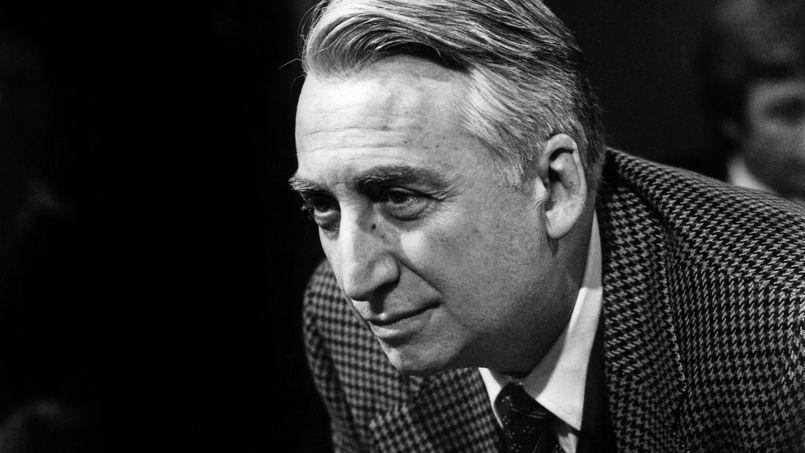
French literary and cultural critic Roland Barthes, whose Mythologies (1957)
sets the stage for modern critiques of material culture
As we think about the field of English studies in the late 20th and early 21st century we're at home with the idea that our work might focus on subjects other than traditional written texts — audio recordings, videos, photographs, and other art objects, for example, as our work over the last several classes have revealed — but on the esoteric and interdisciplinary fringes, where innovative creative work is being done, there's something even more abstract (and, simultaneously, concrete): the object. Interdisciplinary is the key word here, since the way in which one addresses a given object might touch upon any number of other subject areas, from history to philosophy, economics to sociology, psychology to religion.

We'll start with a few selections from Roland Barthes' Mythologies, a book of brief essays that originally ran as a column in Les Lettres Nouvelles and explore the greater resonances of everyday things. In the second part of the book, Barthes explains the motivation behind his observations, offering the notion of "second-level signification," which builds upon the basic linguistic transaction (i.e. a signifier and a signified combining to form a symbol), moving from denotation to connotation. Still, even if that sentence doesn't make any sense to you at all, the ideas behind Barthes' seductive prose will.

Roland Barthes, from Mythologies [PDF]
  • Soap-powders and Detergents
  • Toys
  • Wine and Milk
  • Steak and Chips
  • Plastic
We'll stay in France for our next brief reading, Georges Perec's, "Notes Concerning the Objects That Are on My Work Table" [PDF] — a short portion of the larger series published as Species of Spaces, which is concerned with everyday materiality.

Next, we'll shift gears from the literary mode to something more journalistic, with two examples of contemporary historical writing about objects. I've already talked in class about the Cooper Hewitt Museum's excellent "Object of the Day" column, which takes a brief look at interesting objects from the museum's vast archives, and we'll start by looking at a few selections from there:

Then, just as records have the 33 1/3 series, and there are numerous similar series dedicated to individual films, objects have now gotten into the act with the "Object Lessons" series of books and essays. So far, full-length books have been released on objects as diverse as the remote control, the golf ball, bread, glass, the phone booth, hair, dust, and doorknobs (among other titles), and The Atlantic has partnered with the series to publish essays in a similar vein. We'll take a look at three such essays for Friday:
  • Mary Niall Mitchell, "The Piano That Can't Play a Tune" [link]
  • T. Hugh Crawford, "Where Have All the Axes Gone" [link]
  • Josh Giesbrecht, "How the Ballpoint Pen Killed Cursive" [link] 

Lydia Burkhalter's collection of gray sweatshirts (from WiC)
We'll close with two selections from the ambitious collection Women in Clothes. Edited by Sheila Heti, Heidi Julavits, and Leanne Shapton, with contributions from more than 600 other women, this wide ranging book "explores the wide range of motives that inform how women present themselves through clothes, and what style really means" via questionnaires, interviews, short essays, photo galleries and many other hybridized forms. 

Were this book not so big and not so expensive, I'd have used it in this class, but hopefully this little taste will spur your interest to explore further:
  • Tavi Gevinson, "Color Taxonomy" [PDF]
  • Amy Fusselman, "The Mom Coat" [PDF]

February 3–6: Studying Video


Just as spent our time working with audio largely meant reading music criticism, our time spent on video will focus mostly on writing about film (and to a lesser degree, television), though it could encompass a far wider range of topics, from cartoons and video games to music videos, YouTube clips, and even GIFs. Still, the ideas and techniques employed in our readings below could just as easily apply to those other disparate media.

In terms of film criticism, there's perhaps no more esteemed figure than the late Roger Ebert (above), who practically revolutionized the field, along with colleague Gene Siskel, through their popular eponymous television show, and that's why we're starting Friday with a selection of his work.

Folks who tuned in on any given week could hear serious, well-considered (if often disagreeing) viewpoints on contemporary movies — from the finest new releases to mainstream dreck — and be exposed to independent productions, foreign films, and cinema classics that might not get coverage in their daily newspapers (though both Siskel and Ebert wrote for competing Chicago newspapers for much of their careers).  The good-natured competition between them, along with their passionate perspectives, often resulted in compelling television, and off-screen they could be even more lovingly vicious:


We'll start with one of Ebert's favorite films of all time, and then move on to a few more recent films that you might be familiar with. In most cases, I've linked both his original review and a later analysis for his "Great Movies" series:
Even Ebert's most scathing reviews are fine examples of critical writing and perhaps even more so than his praise for classic films reveal the depths of his love and respect for the medium. Here are two of his most infamous pans. You don't necessarily need to read these, but it is quite pleasurable to do so:
  • North (1994) [link]
  • Baby Geniuses (1999) [link]
    Pauline Kael at The New Yorker in 1985.
    Aside from Gene Siskel, one of Roger Ebert's few true peers was Pauline Kael, The New Yorker's film critic from 1968–1991. Kael's highly individual voice — frank and brazen, while unapologetically passionate about films that deeply moved her — won her as many enemies as friends, and while her tenure was relatively brief (she retired after twenty-three years due to Parkinson's disease), her influence was long-lasting, most notably through the "Paulettes." This group of young critics that Kael took under her wing in the 1970s (including A.O. Scott, Elvis Mitchell, David Edelstein, and the two men who'd take her place at The New Yorker, Anthony Lane and David Denby) continue in her footsteps to this day.

    We'll look at a few pieces from throughout her career that vary in length and tone, from French New Wave and American Auteur to one of Scorcese's earliest masterpieces and Dustin Hoffman in drag:
    • Masculin Féminin (1966) [link]
    • Bonnie and Clyde (1968) [PDF]
    • Raging Bull (1980) [PDF]
    • Tootsie (1982) [PDF]

    On Monday the 6th, we'll switch gears to focus on television and video-based installation art. While the film critic has long been held in high esteem, her peers writing on the small screen have not always received the same respect. Nonetheless, just as we find ourselves overwhelmed by excellent scripted television choices in this day and age, a new class of insightful critics have risen to the challenge of writing about this unique medium. While we don't have the time to cover their work as thoroughly, I'd like to offer up a few interesting examples, and also happily point you towards Matt Zoller Seitz's article "There Has Never Been a Better Time for TV Criticism" in Vulture, which highlights some of the very best writers in this field.

    Let's begin with Emily Nussbaum, The New Yorker's television critic. Given the high-profile nature of that role, I found her reversal of opinion on the Cinemax series The Knick, to be a refreshing act of critical transparency that also made clear some of the challenges TV writers face vs. their film reviewer peers:
    • "Surgical Strikeout: Steven Soderbergh's Disappointing 'The Knick'" (8/11/14) [link]
    • "I Changed My Mind About 'The Knick'" (10/2/14) [link]
    Next, I thought I'd offer up two contemporaneous articles covering very similar ground: the topic of race on one of my favorite recent TV series, 30 Rock. Given the disparate profiles of the two venues and the authors' individual styles, there's as much in common between these pieces as there are differences:
    • Wesley Morris, "30 Rock Landed on Us: Identity Politics and NBC's Most Subversive Show" in Grantland (1/31/13) [link]
    • Alyssa Rosenberg, "Liz Lemon's White Guilt, The Black Crusaders, and Grizz and Dot Com: Why '30 Rock' Mattered On Race" in ThinkProgress (1/29/13) [link]


    Finally, because writing about the moving image can imply more than film or television, I'm also giving you two 2012 pieces by Daniel Zalewski from The New Yorker on Christian Marclay's 2010 installation/film The Clock (you can view an excerpt from The Clock above):
    • "The Hours" [link]
    • "Night Shift with 'The Clock'" [link]

    º º º

    As I've done with the previous posts, here's a glossary of film terminology from the British Film Institute that might be a useful resource if you choose to write about the moving image. Another useful resource is Roger Ebert's (abridged) glossary of movie terms.

    Tuesday, January 24, 2017

    January 30 – February 1: Studying Audio

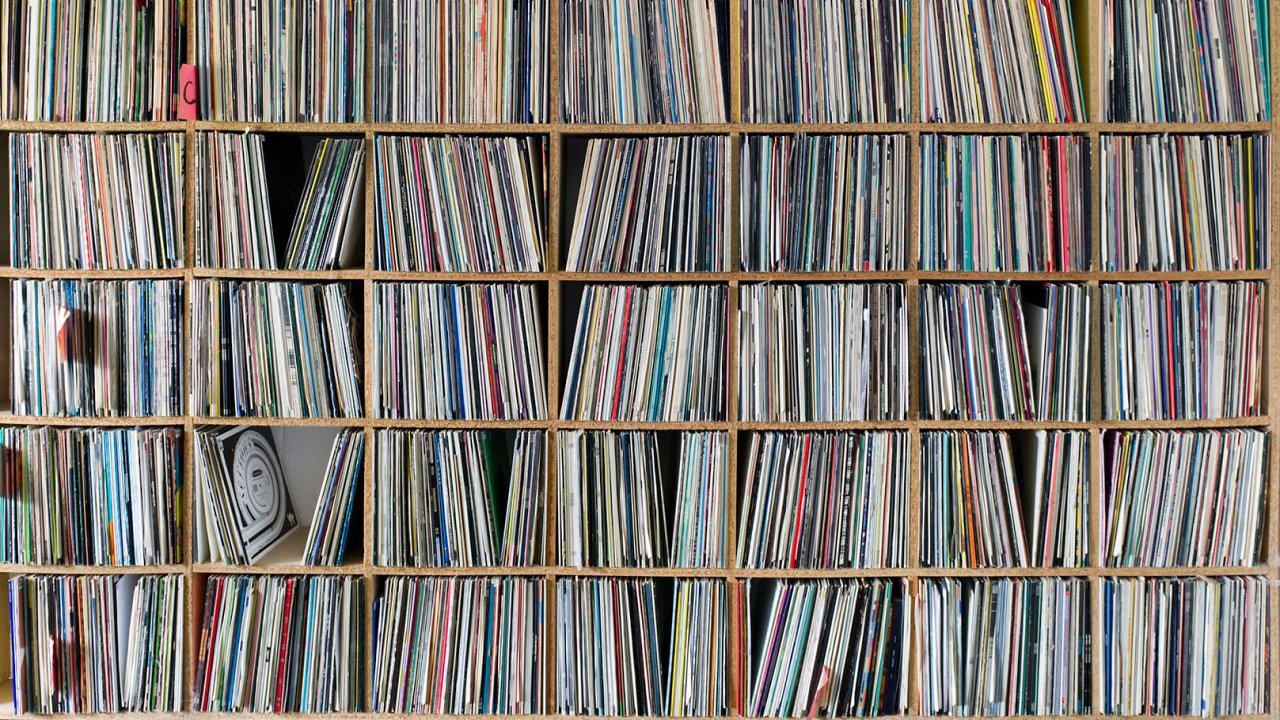
    The record shelves of legendary BBC Radio 1 DJ John Peel.
    When we think of doing audio, our mind most readily thinks of music, though, as last week's class on poetry suggested, sound can be a part of our conception of that genre, and sound can be a critical component of our analysis of film (which we'll be discussing later this week) as well. As we did with the visual arts, we'll spend two days on approaches to audio.

    We'll start on Monday by thinking critically about listenership with two pieces that should provide a solid foundation upon which to build. First up we have "The Three Listening Modes," an excerpt from French composer and sound theorist Michel Chion's book Audio-Vision: Sound on Screen. [PDF]

    I'm pairing that with "How We Listen," a chapter from composer and conductor Aaron Copland's iconic book, What to Listen For in Music. Just as Chion proposes three listening modes (causal, semantic, and reduced), Copland offers us three planes on which we listen to music (the sensuous, the expressive, and the sheerly musical). [PDF]

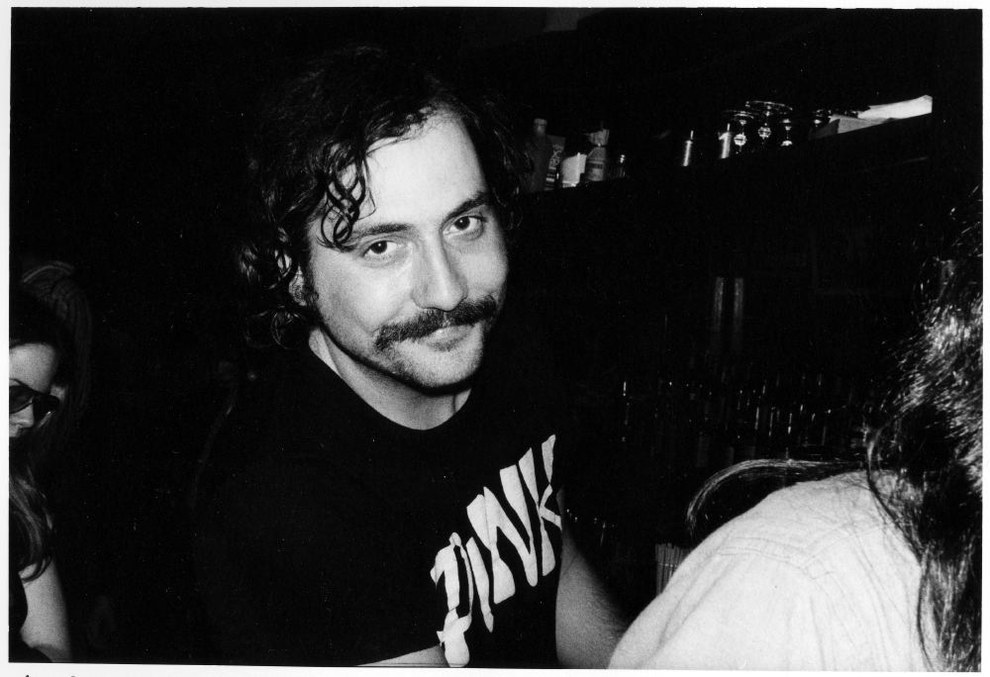
    Lester Bangs, patron saint of rock critics, in 1977.
    We'll wrap up the day with a few selections from a pioneering, one-of-a-kind rock critic: the late, great Lester Bangs. During his tenure at Rolling Stone and Creem from the late 60s to the mid-70s, and later as a freelance writer, Bangs tirelessly championed artists he deemed worthy — effectively conceptualizing the genre of punk rock, and later advocating for heavy metal and new wave acts — in a rapturous, free-wheeling style that displayed considerable musical knowledge along with an admiration for authors like Jack Kerouac, William S. Burroughs, and Hunter S. Thompson. Here's a taste of his ornery style:


    You'll be reading a few excerpts from Psychotic Reactions and Carburetor Dung: The Work of a Legendary Critic: Rock'N'Roll as Literature and Literature as Rock 'N'Roll, a posthumous collection of Bangs' best assembled by Greil Marcus in 1988: [PDF]
    • "Kraftwerkfeature" (on Krautrock pioneers Kraftwerk)
    • "The Greatest Album Ever Made" (on Lou Reed's notorious Metal Machine Music)
    • "A Reasonable Guide to Horrible Music" (a brief list-piece on noise music)

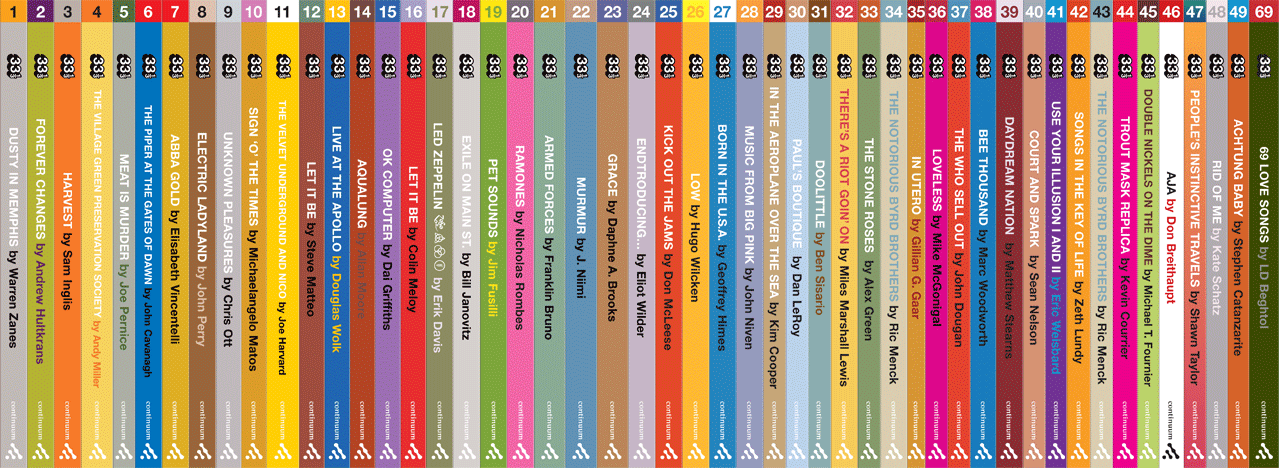
    The first 50 (of 118 total) books in the 33 1/3 series. I've read 22 of these and 29 altogether (click to enlarge).
    As is the case in other genres, there's a tension in music criticism — as in many other fields — between the maximal and the minimal: talented authors who are capable of writing book-length explorations of complex topics banging their heads up against the strictures of popular journalism (where 300 word reviews are considered a luxury). One of my favorite venues for the former over the past decade has been the 33 1/3 series, which has released more than a hundred books on important albums from ABBA to Neil Young, which address their subjects with startling insightfulness through a diverse array of approaches.

    We'll start Friday off with a few selections from Marc Woodworth and Ally-Jane Grossan's recent volume, How to Write About Music: Excerpts from the 33 1/3 Series, Magazines, Books and Blogs with Advice from Industry-leading Writers, which, among other things, contains exemplary reviews of very contemporary albums you're more like to be familiar with. I've also included a few bits of advice and a useful writing prompt from the book: [PDF]
    • "Expert Advice from Our Writers"
    • Ann Powers on Daft Punk's Random Access Memories
    • Jim DeRogatis on Simon and Garfunkel's Bookends
    • Lou Reed on Kanye West's Yeezus
    • "Writing Prompt: The Blind Review"
    • "The Five Things Every Music Writer or Editor Needs"
    • Marty Davis on Black Flag
    Next, for the sake of comparison, we'll look at a trio of reviews of David Bowie's triumphant final album, Blackstar, from three very different sources, NPR, Pitchfork, and Rolling Stone:

    • "David Bowie's 'Blackstar' Is Adventurous To The End" by Barry Walters: [link]
    • "David Bowie, Blackstar" by Ryan Dombral: [link]
    • "David Bowie: Blackstar" by David Fricke: [link]
    Finally, also from NPR, here's Linda Holmes' "The Individualism And Fist-Pumping Of George Michael's 'Freedom '90,'" a tribute published after the singer's death that focuses on what's perhaps the late singer's most iconic track. While reading this piece, I was genuinely struck by the facile way in which Holmes balances the audio and video elements of the track and works on both macro and micro levels. It's an excellent piece of criticism and one worth thinking about analytically: [link]

    Thursday, January 19, 2017

    January 25–27: Studying Visual Arts

    Visitors appreciating the unique architecture of New York City's Guggenheim Museum.
    Much like the other disciplines we'll be looking at over the next few weeks, the visual arts are a remarkably broad and complex subject that's not really all that easy to encapsulate briefly. Nonetheless, we shall do our best over the next two classes with a handful of foundational texts and an opportunity to look comparatively at a little contemporary art criticism.

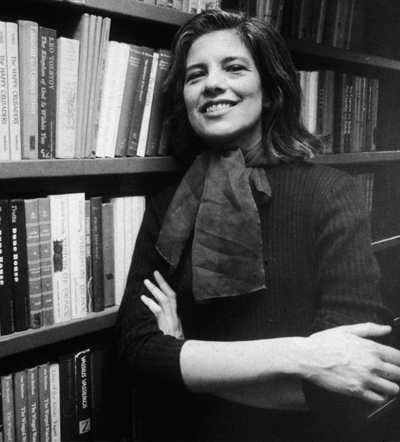
    For Wednesday, we'll start with two short pieces by Susan Sontag, originally published in the New York Review of Books in the fall of 1973. They'd later appear as the first two chapters in her landmark essay collection, On Photography (1977):

    • "Photography" (later titled "In Plato's Cave"): [PDF]
    • "Freak Show" (later titled "America, Seen Through Photographs, Darkly"): [PDF]
    The former deals more generally with the medium of photography while the latter is a review of two collections of photos by Diane Arbus and Walker Evans, which frames its argument through the ideas of Walt Whitman. You should easily be able to Google some of the specific images Sontag describes for the sake of comparision.

    Next, we'll read the first chapter of Ways of Seeing (1972), by recently-deceased critic John Berger, which starts with the provocative assertion that "Seeing comes before words. The child looks and recognizes before it can speak." As he openly acknowledges, many of his ideas are shaped by Walter Benjamin's iconic essay "The Work of Art in the Age of Mechanical Reproduction": [PDF]


    For Friday, we'll begin with the first two chapters of Scott McCloud's Understanding Comics: the Invisible Art (1993) — a book that (alongside pioneering works like Art Spiegelman's Maus) helped convince the general public that graphic narratives were more than capable of being legitimate literature. Here, we'll find a wide-ranging discussion of the comic artform and its implications, as well as a very useful introduction to the genre's lexicon: [PDF]

    Keith Haring poses with one of his graffiti pieces in the NYC subway system.
    Finally, we'll take a comparative look at several pieces of art criticism written in response to the same body of work: specifically "Keith Haring: 1978–1982," a wonderfully-constructed 2011 show highlighting the early development of the celebrated pop iconographer, which was co-curated by Cincinnati's own Contemporary Arts Center and later traveled to the Brooklyn Museum (where most of these reviews are from):
    • Karen Rosenberg, "A Pop Shop for a New Generation: 'Keith Haring: 1978-1982' at Brooklyn Museum," The New York Times [link] (related slideshow [link])
    • Rachel Wolff, "Where the Radiant Baby Was Born," New York Magazine [link]
    • Matt Morris, "You Don't Know Keith," CityBeat [link]